
Monthly Archives: February 2016

Creative Commons licences : Are they the solution to copyright infringements ?

  The organisation Creative Commons promotes the use of several ‘Creative Commons’ licenses (CC licences) that are inspired by open source software licensing. Applying to non-software works (text, images, videos, etc.), Creative Commons enables right holders to give the public permissions to make use of their works on conditions of their choice.   Licensed images with Creative Commons   In that sense, copyright holders retain the control of their copyright, while allowing certain use of the work: all rights on the image, or just some of them.  In other words, Creative Commons offers an online form that enables the right holders to configure exactly which of their exclusive rights they agree to give away. Several questions are asked to define the extent of the licence, such as: Would I like to give permission to the use for commercial purposes?, Would I like to give permission to modifications of my work?, etc   Among others, the most common licensing attributed by right holders is an Attribution licence (BY), with permits anybody to use their images however they wish, provided that they give credit (ie ‘attribution’) to the right holders in the form they prescribe. Such a solution has therefore the merit to promote an easy, fair and legal way to share rights with others.   Created to propose an alternative solution to the issue of infringements of digital images, the policy of Creative Commons keeps the interests of the right holders in all events, as provided by their warning on their website:   “Please note that search.creativecommons.org is not a search engine, but rather offers convenient access to search services provided by other independent organizations. CC has no control over the results that are returned. Do [...]

2018-02-15T02:11:29+01:00February 21st, 2016|Non classé|

Natascha Kampusch’s kidnapping: Why is it the landmark case for public policy defences in copyright law?

Background Unauthorised publication of copyrighted images may be authorised when the images lead to the public understanding of significant problems or events. To take an example, the unauthorised use of sketches relying on copyrighted photographs of John Kennedy’s assassination was authorised due to public interest in the event. Another example: the individual who published the copyrighted photograph of John Belushi in a book about his death was not held liable for copyright infringement because it helped to promote free expression and robust debate on the event.   The facts of the Painer Case   The landmark case dealing with the public security exception is undoubtedly the Painer case. Mrs Painer, who is a freelance photographer specialised in children portraits, took photographs of an Austrian girl, Natascha Kampusch, with particular attention to the background, position and facial expression. During several years, she usually sold the photographs she made with her name and address on it. In 1996, Natascha Kampusch was kidnapped and the Police used the photograph at issue to launch a search appeal.   In 2006, Natascha, then aged 10 years, escaped from her kidnaper and before her first public appearance, magazine and newspaper publishers published this photograph in their newspapers, magazines and websites either without indicating the name of the photographer or indicating a name other than Ms Painer's as the photographer. Several of these publications also featured a ‘photo-fit’, generated by computer from the contested photographs, to represent Natascha's presumed current appearance, since there was no recent photograph of her. Ms Painer brought therefore the case in courts for copyright infringement. Several issues were addressed to the CJEU.   The decision of the CJEU   In this decision, the CJEU had to deal [...]

2018-02-15T02:11:50+01:00February 21st, 2016|Non classé|

Alain de Botton: A kinder, gentler philosophy of success

For me they normally happen, these career crises, 00:03 → 00:05 often, actually, on a Sunday evening, 00:05 → 00:07 just as the sun is starting to set, 00:07 → 00:10 and the gap between my hopes for myself, 00:10 → 00:14 and the reality of my life, start to diverge so painfully 00:14 → 00:17 that I normally end up weeping into a pillow.... Then this philosopher suggests a kinder, gentler philosophy of success. And here is the transcript.

2018-02-15T02:12:12+01:00February 1st, 2016|Non classé|

Shawn Achor: The happy secret to better work

And I saw my sister's face, this wail of pain and suffering and surprise threatening to erupt from her mouth and threatening to wake my parents from the long winter's nap for which they had settled. So I did the only thing my little frantic seven year-old brain could think to do to avert this tragedy. And if you have children, you've seen this hundreds of times before. I said, "Amy, Amy, wait. Don't cry. Don't cry. Did you see how you landed? No human lands on all fours like that. Amy, I think this means you're a unicorn....More on Ted Talks

2018-02-15T02:12:25+01:00February 1st, 2016|Non classé|

Meet The Artisans… on the Web!

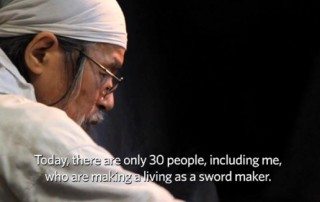
Because we could all support artisans as entrepreneurs, the Web could help us all : It's been called the "Etsy Economy": the growing number of artisans and craftspeople who support themselves via Internet storefronts. From handmade kids' costumes to personalized jewelry to custom cutting boards, online artisan marketplaces are allowing old-fashioned craftsmanship to flourish. See, the past generation perfected mass production and distribution of goods, be it a car, fridge, bike or your phone. But in that process they managed to separate the product from the story. And a product's story is its genesis; where it came from, who made it, and why it was made that way. My former professor, and the founder of IDEO, David Kelley once told me "that if a product were a jet, than its fuel is the story." What happens though when you lose the fuel? As much as companies would like you to think that that phone you're holding shows up at your doorstep untouched by human hands the truth is that it takes a huge amount of time, effort, and skill to product these objects. And when you stop understanding this, like we have now, you start getting wasteful. You no longer respect the product and you no longer have pride of ownership so it's easy to discard or throw away when it gets dinted, broken, or a new one comes along. ATOMIK INSIGHT from Brandon Morrison As one of Japan's last remaining swordsmiths, Korehira Watanabe has honed his craft for 40 years while attempting to recreate the mythical Koto sword. Beauty through Bamboo

2021-11-25T13:29:25+01:00February 1st, 2016|Good vibrations, Non classé|
Go to Top